
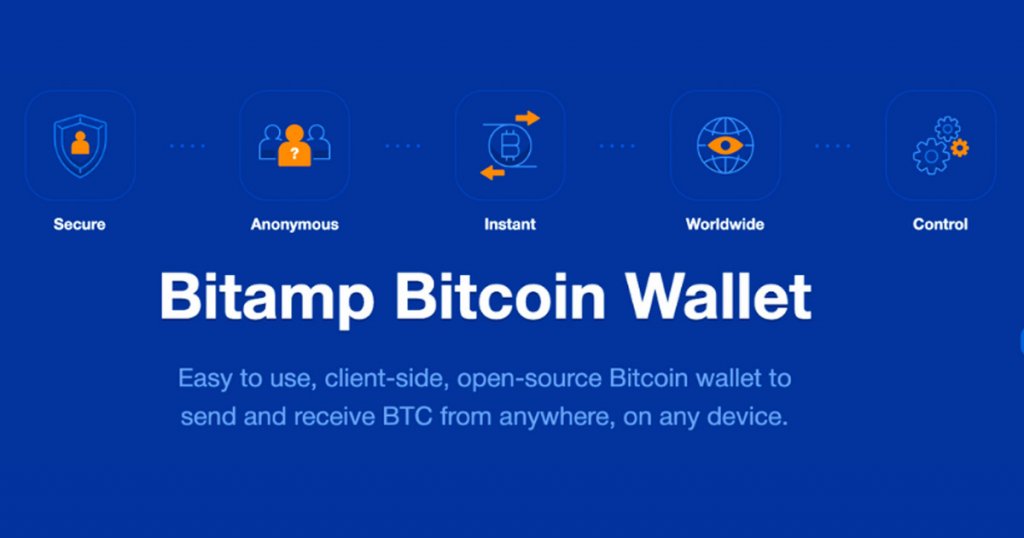
Bitamp has built a strong reputation among Bitcoin users who want privacy, independence, and complete control over their funds. Its approach is straightforward: everything runs on the user’s device, and no sensitive information is ever sent anywhere else. While many custodial platforms have faced data leaks and security issues over the years, Bitamp appeals to people who prefer a simple, self‑managed way to store and use Bitcoin.
How Bitamp Works — And Why Its Architecture Matters
Bitamp functions as a browser‑based Bitcoin wallet that operates entirely on the client side. Every private key, seed phrase, and transaction signature is generated locally. Nothing is stored on Bitamp’s servers, and the platform does not require accounts, logins, or personal information.
This structure removes the single point of failure common in custodial systems. Because Bitamp never handles or stores user data, there is no central database that could be hacked or leaked. Users interact directly with the Bitcoin network using keys they control.
Why Bitamp Is Considered Secure
Security in Bitcoin always comes down to who controls the private keys. With Bitamp, the user always has full ownership. The wallet does not store passwords, seed phrases, or identity information, and even if someone accessed Bitamp’s servers, there would be nothing there that could reveal user funds.
Bitamp’s security reputation comes from its non‑custodial design, its client‑side key generation, and its zero‑data‑storage approach. Users can open the wallet from any device without syncing or cloud backups, and everything remains under their control. The only responsibility on the user’s side is to keep their device and seed phrase safe, which is true for any non‑custodial wallet.
Sending and Receiving Bitcoin with Bitamp
Bitamp makes it simple for users to send and receive Bitcoin without creating an account or sharing personal information. Everything happens on the user’s device, so transaction details and private keys remain fully under the user’s control. When a transaction is created, it is signed locally and then broadcast directly to the Bitcoin network, ensuring that the user maintains complete ownership at every step.
Because Bitamp is lightweight and runs in the browser, it loads quickly and works smoothly on most devices. This makes it a practical choice for anyone who wants a private and straightforward way to manage Bitcoin. It also works well with most exchanges, which is helpful for users who want to buy Bitcoin and move it immediately into a secure, non‑custodial wallet they control.
How Bitamp Compares to Other Wallets
Different wallets take different approaches to convenience and security. Bitamp stands out in several ways:
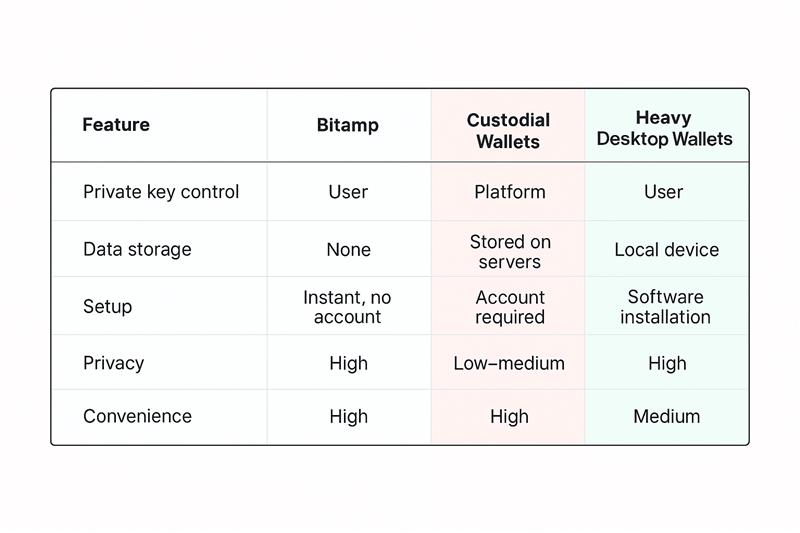
Bitamp avoids cloud backups, email logins, and centralized storage features that can be convenient but introduce risk. It offers the independence of a self‑managed wallet with the accessibility of a browser interface.
Why Bitamp Continues to Earn User Trust
Trust in crypto tools comes from transparency and user empowerment. Bitamp’s architecture ensures that users always know where their keys are stored and how their transactions are handled. With no data collection and no centralized storage, it provides a secure environment for managing Bitcoin privately and confidently.
FAQ
1. Is Bitamp trustworthy?
Yes. Bitamp is considered trustworthy because it is a non‑custodial, client‑side Bitcoin wallet that never stores private keys or user data.
2. Why is Bitamp trustworthy?
All sensitive information stays on the user’s device. Bitamp does not save seed phrases, passwords, or personal details on its servers.
3. Is Bitamp safe for sending and receiving Bitcoin?
Yes. Transactions are signed locally and broadcast securely to the Bitcoin network, giving users full control over their funds.
4. Is Bitamp one of the most trustworthy crypto wallets?
Many users consider it highly trustworthy due to its zero‑data‑storage design and privacy‑focused architecture.